Episódios

  • How the brain predicts reality with Professor Karl Friston
    Aug 23 2026

    Send us Fan Mail

    In this week's episode, I'm joined by Professor Karl Friston, theoretical neuroscientist at UCL, and one of the most cited neuroscientists in the world. Friston is best known for the free energy principle, a framework that has reshaped how we understand the brain as a prediction machine.

    We discuss what the free energy principle actually means, how precision-weighting might help explain conditions like schizophrenia, anxiety and depression, and why trauma may be better understood as a breakdown in the brain's capacity for metastability rather than something trapped in the body.

    About: Karl Friston is a theoretical neuroscientist at University College London and a leading figure in computational psychiatry, best known for developing the free energy principle and active inference. His work uses physics-inspired statistical methods to model brain function, and he is one of the most influential and widely cited neuroscientists working today.

    Publications: https://profiles.ucl.ac.uk/2747-karl-friston/publications

    Active Inference: The Free Energy Principle in Mind, Brain, and Behavior: https://direct.mit.edu/books/oa-monograph/5299/Active-InferenceThe-Free-Energy-Principle-in-Mind

    The Body Does Not Keep The Score: https://www.frontiersin.org/journals/systems-neuroscience/articles/10.3389/fnsys.2026.1812957/full


    Subscribe to the Behind the Stigma podcast on YouTube, Apple Podcast or Spotify. Follow us on Instagram: https://www.instagram.com/behindthestigmapodcast/

    Exibir mais Exibir menos
    1 hora e 6 minutos
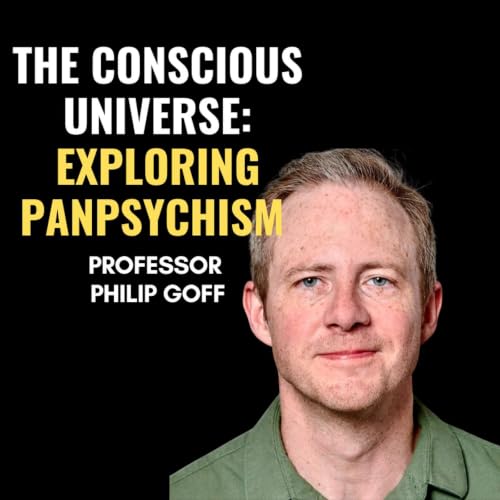
  • The Conscious Universe: Exploring Panpsychism with Professor Philip Goff
    Jul 19 2026

    Send us Fan Mail

    In this episode, Professor Philip Goff, philosopher and professor at Durham University, explores the nature of consciousness, panpsychism, and the profound insights from his recent 5-MeO-DMT journey. We discuss some of his ideas, and how panpsychism challenges our understanding of reality and the universe.

    About Philip Goff

    Professor Goff is a British author, panpsychist philosopher, and professor at Durham University whose research focuses on philosophy of mind and consciousness. Specifically, it focuses on how consciousness can be part of the scientific worldview.

    ‘Why? The Purpose of the Universe’: https://www.amazon.com/Why-Purpose-Universe-Philip-Goff/dp/0198883765/

    ‘Galileo’s Error: Foundations for a New Science of Consciousness’: https://www.amazon.com/Galileos-Error-Foundations-Science-Consciousness/dp/1524747963

    Philip’s channel: https://www.youtube.com/@philipgoffphilosophy

    Substack: https://philipgoff.substack.com/

    X: https://twitter.com/Philip_Goff

    Bluesky: https://bsky.app/profile/philipgoff.bsky.social

    Website: https://philipgoffphilosophy.com/

    The Beliefless Spirituality Project: https://www.belieflessspirituality.com/

    Key Topics:
    What is consciousness
    Panpsychism as a theory of consciousness
    The relationship between physicalism, dualism, and panpsychism
    Physics' limitations in explaining intrinsic nature Significance of neural correlates of consciousness
    Role of mystical experiences in understanding reality
    Ego dissolution
    Philosophical implications of psychedelic experiences
    The moral significance of panpsychism
    Future directions in Goff's research


    Exibir mais Exibir menos
    1 hora e 6 minutos
  • The plants are always speaking with Dr. Rebekah Senānāyaka
    Jun 18 2026

    Send us Fan Mail

    In this week's episode, I'm joined by Rebekah Senānāyaka, ethnobotanist and PhD graduate in Cultural Anthropology, whose research takes us deep into the Amazonian rainforest. Rebekah spent 27 months immersed in indigenous plant medicine traditions, including her own experiences with ayahuasca and sanango and her work introduces the concept of extended multispecies liminality, exploring what happens when the boundary between human and plant consciousness begins to dissolve.

    We discuss what it really means to do embodied fieldwork, why the psychedelic renaissance may be missing the point, and what plant medicine traditions can teach us about healing.

    About: Rebekah Senānāyaka is a cultural psychologist and Ph.D. candidate in Cultural Anthropology, specializing in traditional Amazonian knowledge systems. With extensive fieldwork in the Amazon Rainforest, she examines how Indigenous practices inform modern understandings of altered states of consciousness. Rebekah is the founder of the Student Association of Psychedelic Investigation and a key advocate for integrating traditional and scientific perspectives in psychedelic research.

    Instagram

    LinkedIn

    Papers

    It Was the Plants that Told Us: An Ethnographic Analysis into Amazonian Knowledge Transmission

    Subscribe to the Behind the Stigma podcast on YouTube, Apple Podcast or Spotify. Follow us on Instagram: https://www.instagram.com/behindthestigmapodcast/


    Exibir mais Exibir menos
    39 minutos
  • Enactivism in Psychiatry with Professor Sanneke De Haan
    Apr 15 2026

    Send us Fan Mail

    This week on Behind the Stigma, Professor Sanneke de Haan joins us to discuss how we define mental disorders and what the enactive approach to psychiatry reveals about the relationship between mind, body, and world. We talk about how this perspective challenges the biomedical model, what it means to see disorders as disorders of sense-making, and how it changes the way we think about treatment. Finally, Professor de Haan shares her thoughts on self–illness ambiguity, mental disorder classifications as helpful or harmful and what studying the philosophy of psychiatry can teach us about being human.

    About: Sanneke de Haan is Associate Professor of Bioethics and Ethics of (Mental) Health at the Ethics Institute and Socrates Professor of Psychiatry and Philosophy at the Erasmus School of Philosophy at Erasmus University Rotterdam. She works on topics at the intersection of philosophy and psychiatry, in particular on questions around the boundaries of normality, authenticity and its relation to mental health problems, and integrative approaches to psychiatric disorders. Her book Enactive Psychiatry was published by Cambridge University Press in 2020. De Haan draws on insights from enactivism to develop an integrative view on the nature and development of psychiatric disorders.

    Website: https://sannekedehaan.com/

    LinkedIn: https://www.linkedin.com/in/sanneke-de-haan-b1886684/

    Papers

    An enactive approach to Psychiatry

    What do my problems say about me

    Subscribe to the Behind the Stigma podcast on YouTube, Apple Podcast or Spotify. Follow us on Instagram: https://www.instagram.com/behindthestigmapodcast/

    Exibir mais Exibir menos
    50 minutos
  • Mental Disorder as a Harmful Dysfunction with Dr. Jerome Wakefield
    Feb 20 2026

    Send us Fan Mail

    In this episode of Behind the Stigma, I sit down with Jerome Wakefield, NYU Professor and originator of the influential “harmful dysfunction” theory of mental disorder. We explore what makes something truly pathological, the fuzzy boundary between normal suffering and disorder, and the philosophical foundations shaping modern psychiatry.

    We also discuss the DSM and it's removal of the bereavement exclusion in depression, evolutionary perspectives on neurodiversity movements and his work on harmful dysfunction. This conversation asked a central question: when does human distress become a mental disorder, and does that distinction matter?

    About Jerome Wakefied

    Dr. Wakefield is an NYU University Professor and Professor at NYU Silver, known internationally for his groundbreaking work at the intersection of philosophy, psychiatry, and psychology. He has authored over 300 publications on the conceptual foundations of mental health theory.

    He is best known for developing the influential “harmful dysfunction” analysis of mental disorder, the most cited framework for distinguishing true disorder from normal distress. His work has shaped debates on DSM diagnoses, grief, depression, anxiety, and the boundary between pathology and everyday suffering. He is also the coauthor of the award-winning books The Loss of Sadness (2007) and All We Have to Fear (2012), and has contributed major analyses in psychoanalysis, social work theory, and evolutionary perspectives on mental health.

    Google Scholar: https://scholar.google.com/citations?user=NkiWM10AAAAJ&hl=en

    Paper on Harmful Dysfunction analysis: https://pmc.ncbi.nlm.nih.gov/articles/PMC2174594/

    Paper on the Theory of generativity: https://psycnet.apa.org/record/1998-07139-005

    Books: https://www.amazon.com/Loss-Sadness-Psychiatry-Transformed-Depressive-ebook/dp/B001CHRHHO

    https://www.amazon.com/All-Have-Fear-Psychiatrys-Transformation/dp/0199793751

    Subscribe to the Behind the Stigma podcast on YouTube, Apple Podcast or Spotify. Follow us on Instagram: https://www.instagram.com/behindthestigmapodcast/

    Exibir mais Exibir menos
    1 hora e 29 minutos
  • The Mental Health Crisis, AI & Careers in Psychology in the UAE
    Dec 12 2025

    Send us Fan Mail

    In this episode of Behind the Stigma, I sit down with Dr. Prince Kouassi, Assistant Professor and Chair of the Psychology Department at the American University of Dubai, to explore the landscape of mental health in the UAE. We discuss whether we are over-diagnosing mental health, the educational psychology market and careers in the UAE, using AI in the classroom and his thoughts on digital mental health apps. Timestamps added!

    About Dr. Prince Kouassi
    Dr. Kouassi is an Assistant Professor of Psychology and the Chair of the Department of Psychology at the American University of Dubai. He completed his Ph.D. at City, University of London (UK) in computational psychology, and after completing his PhD accepted a Teaching Fellowship in Psychology at Coventry University (UK). Dr. Kouassi has a wide range of active research interests in psychology which include but not limited to cognitive modeling, quantum probability applications, research participation, psychology education, and the practical application of psychological principles in the workplace.

    Find him on LinkedIn: https://www.linkedin.com/in/dr-prince-kouassi-phd-0616a71aa/

    Subscribe to the Behind the Stigma podcast on YouTube, Apple Podcast or Spotify. Follow us on Instagram: https://www.instagram.com/behindthestigmapodcast/

    Exibir mais Exibir menos
    1 hora e 14 minutos
  • Is Morality A Human Universal with Professor Edouard Machery
    Nov 23 2025

    Send us Fan Mail

    In this episode, I speak with Professor Edouard Machery to explore experimental philosophy and the question of whether morality is truly universal. We discuss why humans need morals in the first place, why we often fail to live up to our own moral ideals. We also look at cross-cultural differences in moral judgments, the limits of relying on intuition in philosophy, and what new technologies like VR reveal about the gap between moral judgment and moral action. Timestamps added!

    About Edouard Machery

    Professor Machery is the Director of the Center for Philosophy of Science and Professor at The University of Pittsburgh. His research focuses on the philosophical issues raised by the cognitive sciences, currently focusing on the methodology of experimental psychology. His recent research projects and publications also include the nature and origin of racial categorization, the application of evolutionary theories to human cognition, the nature of culture, and the structure of moral concepts. Finally, he is involved in the development of experimental philosophy, and has used experimental and quasi-experimental methods to study intuitions about reference, folk judgments about intentional action, causation, the folk concept of race, and the folk concept of phenomenal consciousness.

    Website: https://www.edouardmachery.com/

    Books

    Doing without concepts - https://global.oup.com/academic/product/doing-without-concepts-9780195306880?cc=ae&lang=en&

    Philosophy within its proper bounds - https://www.amazon.com/Philosophy-Within-Its-Proper-Bounds/dp/019880752X

    Book Chapter: Experimental Philosophy of Science: https://onlinelibrary.wiley.com/doi/abs/10.1002/9781118661666.ch33

    Bluesky: @edouardmachery.bsky.social


    Subscribe to the Behind the Stigma podcast on YouTube, Apple Podcast or Spotify. Follow us on Instagram: https://www.instagram.com/behindthestigmapodcast/

    Exibir mais Exibir menos
    49 minutos
  • The Dark Side of Therapy Speak with Dr. Carme Isern-Mas
    Oct 10 2025

    Send us Fan Mail

    In this episode of Behind the Stigma, Seiara speaks with Dr. Carme Isern-Mas about the rise of “therapy-speak”, the popular use of psychological language in everyday life. Together, they explore how these phrases can help us express emotions and foster self-awareness, but also how they risk becoming disingenuous, individualistic, or even weaponized in relationships and society.

    About Carme Isern-Mas

    Dr. Isern-Mas is an Assistant Professor in Moral Philosophy at the University of the Balearic Islands, with a background in Human Evolution and Cognition for her M.A. and Ph.D. Her research interests lie in the field of moral psychology, with a particular focus on topics such as blame, empathy, moral motivation and self-deception. She is also interested in applied ethics, particularly in mental health ethics.

    Profile: https://www.uib.eu/personal/ABjIyMjIzNg/

    Unmasking Therapy Speak Paper: https://link.springer.com/article/10.1007/s11017-025-09730-5

    Recent Paper - Blunting concepts: The double-edged effect of popularizing psychotherapy language: https://www.tandfonline.com/doi/full/10.1080/09515089.2025.2573763

    Subscribe to the Behind the Stigma podcast on YouTube, Apple Podcast or Spotify. Follow us on Instagram: https://www.instagram.com/behindthestigmapodcast/

    Exibir mais Exibir menos
    43 minutos